.jpg)
So you finished your Saturday morning run on the South Creek Greenway Trail, and now you're noticing that familiar tightness in your hamstrings. Or maybe you just hit a new PR on your squat at one of the CrossFit gyms around Springfield, and something in your hip doesn't quite feel right at the bottom of the movement.
Here's the thing most people get wrong about these situations: they assume the problem is that they need to stretch more. That they're "too tight." That if they just foam rolled harder or held that pigeon pose longer, everything would loosen up and the discomfort would disappear.
But what if flexibility isn't your actual problem?
What if the real issue is that you're weak in the exact positions where you need to be strong?
This is where end range loading comes in, and honestly, it's one of the most significant shifts in how we think about injury prevention and rehabilitation in the past decade. Let me break down what this actually means and why it matters for anyone in the Springfield, MO area who wants to stay active without constantly dealing with nagging injuries.
What Is End Range Loading?
End range loading is a training method where you strengthen your muscles at their fully stretched or fully shortened positions, rather than in the middle of a movement where they're naturally strongest. This approach triggers unique structural adaptations, including longer muscle fibers, that protect against injuries and improve functional mobility.
Traditional strength training tends to focus on where your muscles are strongest. Think about a bicep curl: most of the work happens in the middle of the movement, where your muscle can generate the most force. Same with a leg press where you only go down partway, or a bench press that stops a few inches above your chest.
End range loading flips this approach.
Instead of training where you're mechanically strongest, you're deliberately loading your muscles at their limits, either fully stretched or fully shortened.
Here's where it gets interesting from a physiology standpoint. Your muscles have these elastic protein structures that act like springs. When you stretch a muscle under load, you're not just working the contractile fibers that everyone talks about. You're also engaging this passive elastic system that adds significant tension on top of what your muscle fibers are producing. Research shows that this combined tension at long muscle lengths can actually equal or exceed what you produce at mid-range positions, even though your muscle fibers alone would be weaker there.
The practical implication? Training in stretched positions creates a unique stimulus that your body responds to differently than conventional training. Your muscles literally add new contractile segments in series, effectively getting longer, not just bigger. This structural change is the foundation of why end range loading matters so much for injury prevention.
The takeaway: Your muscles respond to being loaded while stretched by physically restructuring themselves to handle that position better. This is fundamentally different from what happens with traditional mid-range training.
The "Fragile Zone": Why Injuries Happen at the Edges, Not the Middle
Let me ask you something: When do muscle injuries actually happen?
Think about the last time you heard about someone pulling their hamstring. Were they casually jogging? Probably not. More likely they were sprinting, reaching for a ball, or making some explosive movement that pushed their body into extreme positions.
Injuries rarely occur in the middle range of motion where your muscles are strongest.
They happen at the edges, at positions where your tissues are under maximal stretch or maximal shortening demands. This is what we call the "fragile zone" in clinical practice.
Here's the problem: you can have impressive mid-range strength and still have critical weak spots at the extremes. The guy who leg presses 600 pounds but only goes halfway down might have serious weakness at deep knee flexion. The runner who can maintain a 7-minute pace on the Frisco Highline Trail might have hamstrings that can't control force during that final phase of the stride, right before their foot hits the ground.
These hidden weaknesses become failure points during maximal exertion.
Your nervous system knows about them too. It limits your movement to protect you, creating what feels like "tightness" when the real issue is that you lack the strength to safely access that range.
The takeaway: You can be strong in conventional exercises and still have dangerous weak spots at the extreme ranges where injuries actually occur. Your body often masks this as "tightness."
Why Stretching Alone Doesn't Fix Chronic Tightness
This is where conventional wisdom really breaks down. Most people, when they feel tight, assume they need more flexibility work. More stretching. More mobility drills. More time on the foam roller before their workout.
But here's what the research actually shows: there's often a significant gap between your passive range of motion (how far a joint can move with external assistance) and your active range of motion (how far you can move it using your own muscular strength).
This gap represents a zone of instability where you possess range you cannot actively control.
Think about that for a moment. If you can passively pull your leg up to your chest, but you can only actively lift it to hip height, everything between those two positions is essentially uncontrolled territory. You might be able to get into those positions with momentum or assistance, but your muscles can't effectively slow down forces or stabilize the joint there.
This is why someone can have "good flexibility" and still get injured doing activities that require extreme ranges of motion.
The flexibility exists. The strength to control it doesn't.
End range loading specifically addresses this gap by training your nervous system to activate muscles at extreme angles, converting passive flexibility into functional mobility that you can actually use and control.
The takeaway: Stretching increases how far you can go. End range loading increases how far you can go while actually controlling the movement. That control is what prevents injuries.
The Hamstring Example: How Muscle Fiber Length Predicts Injury Risk
Let me give you a specific example that we see constantly at 417 Performance, and one that the research literature has extensively documented: hamstring strain injuries.
Hamstring strains are the most common injury in high-velocity sports. Soccer, sprinting, basketball, you name it. And prospective research has identified something fascinating:
Athletes with shorter muscle fibers in their biceps femoris (one of the hamstring muscles) are over four times more likely to sustain an injury.
Why does fiber length matter so much? Because longer fibers allow the muscle to stretch further before the internal structures are pulled beyond their working range. It's like having more rope to work with before you reach the end. Shorter fibers hit that danger zone sooner, making microscopic tearing more likely during high-velocity movements.
Here's the good news: fiber length is modifiable through training.
Specifically, through lowering movements (the eccentric phase) at long muscle lengths. The Nordic hamstring curl, where you slowly lower your body forward while your knees are anchored, has been shown to significantly increase fiber length by stimulating your muscles to add new contractile segments. Standard lifting-focused training doesn't produce this structural change and may actually shorten fibers over time.
This is why we incorporate specific end range protocols into our rehabilitation programs for hamstring injuries. The goal isn't just to reduce pain or restore strength in general terms. We're aiming to actually change the physical structure of the muscle to make it more resilient against future injury.
The takeaway: Short muscle fibers are a major risk factor for hamstring strains, but you can lengthen them through specific training. This is why exercise selection matters so much in rehabilitation.
Best Exercises for End Range Loading: Evidence by Body Part
The principles here apply across multiple muscle groups, though the specific applications vary. Let me walk through some of the most relevant examples for the active population in Springfield.
Triceps: Why Overhead Extensions Beat Pushdowns
A study published in the European Journal of Sport Science compared overhead triceps extensions to cable pushdowns. Same muscle, different positions.
The overhead group achieved approximately 40% greater increase in muscle size.
This was over 12 weeks, and the overhead group actually used lighter weights. The mechanism here is that the long head of the triceps crosses the shoulder joint. When your arm is overhead, that portion of the muscle is maximally stretched. Training in this position creates a stretch-based growth response that you don't get from neutral positions.
Practical takeaway: if you're doing all your triceps work with pushdowns and dips, you're leaving significant development on the table. Overhead variations matter.
Hamstrings: Seated vs. Prone Leg Curls
Research comparing seated leg curls to prone (lying face-down) leg curls consistently shows greater muscle growth in the seated variation.
Why? In the seated position, your hip is bent, which places the hamstrings in a lengthened state where they attach at the hip. This allows for greater tension during the knee-bending movement.
For anyone dealing with recurrent hamstring issues, whether you strained it playing pickup basketball at the Jordan Valley courts or during a Hyrox event, exercise selection matters. The position of your hip during hamstring training changes what kind of stimulus you're providing.
Quadriceps: The Truth About Deep Squats and Knee Health
There's been a persistent myth that deep squats are dangerous for your knees.
The research tells a different story.
Deep squats produce significantly higher glute and inner thigh activation compared to partial squats. The way the tendons and ligaments wrap around the knee at deep angles actually distributes forces effectively across the joint surface.
More importantly, training through a full range of motion builds strength at the angles required for athletic performance. If you only train partial squats but then need to catch yourself from a fall or absorb force from a deep lunge, you're asking your body to perform in positions it hasn't been trained for.
For the CrossFit and Hyrox athletes around Springfield, this is particularly relevant. Competition movements often demand full depth. Training only partial ranges creates a mismatch between what you practice and what you need.
The takeaway: The position you train in determines where you get stronger. For triceps, hamstrings, and quadriceps alike, exercises that load the muscle in a stretched position produce superior results.
End Range Strength for Balance and Fall Prevention
End range loading isn't just for competitive athletes. There's compelling evidence for its importance as we age, and this deserves more attention than it typically gets.
When you start to lose your balance, your body uses different strategies to recover depending on how severe the wobble is. Small shifts get handled at the ankle. Bigger disruptions require rapid force production at the hip.
And that hip strategy requires the ability to generate quick, powerful movements at the extreme ranges of hip flexion and extension.
If you can't produce force quickly in these positions, your body either uses less effective strategies or simply fails to recover.
Research on combined resistance and balance training in older adults shows significantly greater improvements in dynamic balance compared to resistance training alone. Studies on home-based strength and balance exercises indicate a reduction in fall risk by approximately 25%. The specific training of hip muscles at end ranges prevents the "hip drop" that often precedes a stumble turning into a fall.
For the active adults in Springfield who want to maintain their quality of life as they age, whether that's continuing to hike at Busiek State Forest or keeping up with grandchildren, building end range strength now pays dividends later.
The takeaway: Fall prevention isn't just about balance drills. It requires the ability to generate force quickly at extreme hip angles, which is exactly what end range loading develops.
How We Use End Range Loading at 417 Performance
When someone comes to our clinic with a sports injury or chronic pain issue, we're looking at more than just where it hurts. We're assessing whether weakness at end ranges is contributing to the problem or putting them at risk for recurrence.
Take the McKenzie Method for spinal rehabilitation, which we use for certain back pain presentations. This approach uses repeated end range movements, predominantly extension, to manage symptoms. The key indicator we look for is "centralization," where pain that radiates down the leg retreats toward the spine in response to these movements. This end range loading influences disc pressure and reduces nerve tension.
For tendon issues like Achilles or patellar tendinopathy, we prescribe heavy, slow resistance or eccentric protocols that load the tendon while it's lengthening.
Loading the tendon into the stretch is required for adaptation.
The tendon needs that strain to stimulate tissue repair and reorganization.
What we're not doing is simply telling people to rest until the pain goes away. Modern rehabilitation recognizes that tissues need appropriate stress to heal properly. The key is applying that stress intelligently, at the right ranges, with the right loads.
The takeaway: Whether it's back pain, tendon issues, or muscle strains, effective rehabilitation often requires loading tissues at their end ranges rather than avoiding those positions.
How to Start End Range Training: Practical Guidelines
If you're convinced that end range loading should be part of your approach, here are some practical considerations:
Volume management matters more than usual. End range exercises cause more muscle damage due to the stress of stretching under load. This often results in significant soreness for the next few days. Start with lower volumes (maybe two sets instead of four) and build up gradually.
Control the lowering phase. To maximize the benefits of training in stretched positions, the lowering phase should be controlled, typically 2-4 seconds, often with a pause at the bottom. Bouncing out of the stretched position using momentum negates the structural benefits you're after.
Range of motion should never be sacrificed for weight.
This is non-negotiable. Loading heavy in a partial range brings you right back to mid-range training and defeats the entire purpose. If you need to reduce the weight to access the full range with control, reduce the weight.
Consider exercise order. End range exercises are often best placed later in a workout for muscle-building goals (ensuring safety when fatigued) or first for injury prevention purposes (preparing the tissues before more demanding work).
The takeaway: End range training is more demanding on your tissues than conventional lifting. Start conservatively, prioritize control over load, and never cut the range short to lift heavier.
When to Get Professional Help for Sports Injuries in Springfield, MO
Here's where I have to be direct with you: while end range loading is incredibly valuable, it's also more demanding on your tissues than conventional training. If you're already dealing with an injury, trying to figure out the right approach on your own can be tricky.
At 417 Performance, we see a lot of athletes who have either avoided end range training entirely (and developed the fragile zones we discussed) or who jumped into aggressive protocols without proper progression and made things worse.
Neither extreme serves you well.
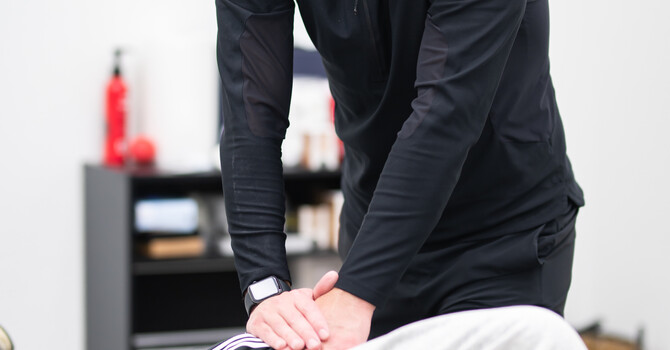
What we provide is the assessment to identify where your specific weak spots exist, the clinical reasoning to determine appropriate progressions, and the hands-on treatment to help tissues adapt when needed. We're looking at how your body actually moves, not just applying generic protocols.
For anyone in the Springfield area dealing with recurrent injuries, chronic tightness that doesn't respond to stretching, or the desire to perform better in their sport without constantly breaking down, this is the kind of evaluation that can change your trajectory.
The Bottom Line on End Range Loading
The shift from mid-range loading to end range loading represents a fundamental change in how we understand musculoskeletal health.
The evidence is clear: prioritizing loading at the end range of motion, specifically in lengthened positions, delivers better outcomes for muscle development, structural adaptation, flexibility, and injury prevention.
Traditional exercises remain valuable for general strength. But they often fail to address the specific structural vulnerabilities that lead to injury, like short muscle fibers in the hamstrings or the inability to control force in extreme positions.
End range loading bridges the gap between active strength and passive flexibility, creating a buffer zone of control and structural resilience.
This buffer protects joints during the unpredictable demands of sport and the balance challenges that come with aging.
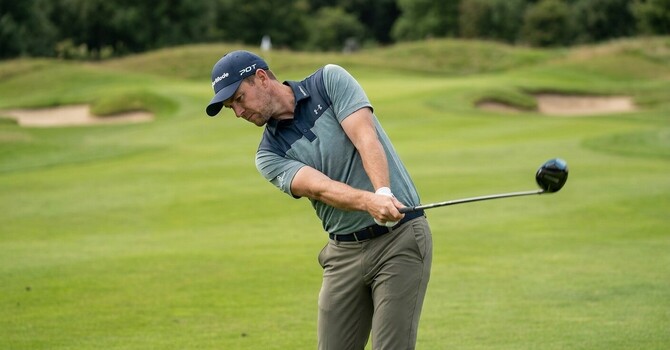
Whether you're training for Hyrox events, trying to improve your golf game, running the trails at Nathanael Greene Park, or just wanting to stay active and healthy for decades to come, understanding this principle matters.
Stability isn't found in avoiding the edges of movement.
It's found in strengthening them.
If you're ready to address your end range weaknesses and build a more resilient body, 417 Performance is here to help. We specialize in non-surgical treatment for sports injuries in Springfield, Missouri, and we understand what it takes to keep active people moving well.
References:
Timmins RG, et al. Short biceps femoris fascicles and eccentric knee flexor weakness increase the risk of hamstring injury in elite football (soccer): a prospective cohort study. British Journal of Sports Medicine. 2016;50(24):1524-1535. DOI: 10.1136/bjsports-2015-095362
Maeo S, et al. Triceps brachii hypertrophy is substantially greater after elbow extension training performed in the overhead versus neutral arm position. European Journal of Sport Science. 2022;22(8):1240-1250. DOI: 10.1080/17461391.2022.2100279
.jpg)
.png)