.jpg)
I read The Obstacle Is The Way by Ryan Holiday a few weeks ago, and I could not stop thinking about the people I treat.
The book is built on an old idea, that the thing standing in your way is not blocking the path, it is the path. The whole argument is organized around three things you can do with any obstacle: how you see it, how you act on it, and how you endure it. Holiday calls them perception, action, and will. And the more I read, the more it sounded like a description of the exact thing I watch happen in the clinic every week. Someone walks in convinced their injury is the worst thing that ever happened to them. Months later they walk out moving better than they did before they got hurt.
Not everyone, though. The ones who come out better are the ones who handle the injury a specific way. The book gave me language for what that way actually is. So I want to walk through those three ideas, not as philosophy, but as a practical description of how you turn a rehab into the best training block of your life.
Perception: The Injury Is Not The Problem. How You See It Might Be.
The first discipline is perception, and the idea underneath it is that an event by itself is neutral. It carries no meaning until you assign one, and the meaning you choose shapes the outcome more than the event ever does. An injury is a physical fact. The story you tell yourself about that fact is where a recovery is quietly won or lost.
This matters because fear is very good at disguising itself as fact.
Take a runner who has spent months logging long training miles on the Frisco Highline Trail, building toward a goal race, and then feels the knee give out a few weeks before the start line. In the days that follow, a story writes itself. I'm done. This is permanent. I'll never run the way I used to. My body finally broke. Almost none of that is true. It is fear in the costume of certainty. And the runner who believes it stops moving, while the runner who looks at the same knee and sees a solvable problem gets to work. Same injury. The outcome follows the way it was seen.
The skill that separates those two runners is an old one, and it is the heart of the whole perception discipline: knowing the difference between what you control and what you don't.
Control the controllable. You do not control that the injury happened, how fast the tissue heals, or the race you are going to miss. You do control what you do with the rest of your body while it heals, how you read the sensations you feel, and whether you show up for the parts of rehab that are dull. The runner who spends the recovery furious about the missed race is pouring effort into the things they cannot change. The one who asks what they can build while the knee heals is spending it on the things they can.
That second question, what can I build while this heals, is where perception turns into something better than damage control. An injury forces a stop, and a stop is a rare thing for a driven person. When a runner finally sits still long enough to get their stride examined, we almost always find the thing that caused the injury in the first place. Hips that were too weak to support the mileage. A calf that could not absorb the load. A stability problem on one side they never knew was there. The knee did not fail at random. It was the loudest symptom of something quieter that had been building for a long time. Seen clearly, the obstacle is not just something to survive. It is the first honest look you have gotten at what was holding you back all along.
This is not a soft observation. In a large analysis of patients recovering from ACL surgery, the people who returned to their sport and the people who did not had roughly the same knee function on objective testing. Their knees were about equally capable. What separated them was psychological. The ones who got back had less fear of movement and more confidence that their body could handle load. The knee was ready in both groups. Only one group believed it, and belief is what predicted who returned (Xiao and colleagues, 2023).
Action: The Strength Ceiling Nobody Wants To Admit They've Hit
The second discipline is action, and Holiday is specific that it has to be the right action, taken in the right order. Effort thrown at the wrong stage does not move you forward. It sets you back. For people who have spent their whole lives succeeding through sheer intensity, this is the hardest lesson in a recovery, because it asks them to trust a sequence instead of trusting how hard they can push.
Nobody feels this harder than a lifter, and it comes down to pride. When you are the person who loads the bar heaviest in the room, taking the weight down, sometimes way down, does not register as a training adjustment. It registers as going backward in front of everyone who used to watch you go up. Every lighter set feels like proof that you have lost a step, and for a while it feels a little like being a fraud.
Here is what I tell them, and it is true. The weight you are stuck at is not your strength. It is your ceiling. It is the most your tissues and your current mechanics can tolerate before something gives out. If you keep grinding against that ceiling, you will keep hitting it, and every time you hit it you re-aggravate the same injury. You can spend years fighting for the same number and never get above it, because the thing capping you was never your effort.
But if you are willing to look weaker for a short stretch, to lighten the load, clean up the form, and build the supporting tissue that was never strong enough to begin with, you raise the ceiling itself. And when the ceiling moves, your strength does not just return to where it was. It climbs past it. The lifters who let themselves look weak for a season are the ones who end up genuinely strong. The ones who refuse stay exactly where they are, injury and all.
There is a second half to the action discipline that these same people almost always miss, and it comes down to doing the job in front of you instead of the job you wish you had. An injured back does not mean an injured everything. A lifter sidelined from heavy pulling still has a healthy upper body, healthy legs, a cardiovascular system, and a nervous system that all still respond to training. Letting all of that sit idle because one movement is off is a choice, and it is the wrong one.
It matters more than it looks. When you train one side of the body hard, the resting side gets stronger too, through a neurological effect that has been documented for more than a century. Strength transfers to the untrained limb without it moving at all, because the adaptation is happening in the nervous system, not just the muscle (Lee and Carroll, 2007). The lifter who keeps training everything they are cleared to train is not killing time until the injury heals. They are holding onto the strength and the fitness that most people hand over the moment they get hurt.
What the trade actually buys you. The lifter who drops the weight to fix the form and build the supporting tissue looks weaker for a few weeks and comes back with a higher ceiling than they have ever had. The one who keeps grinding against the ceiling stays pinned to the same number with the same injury waiting underneath it. Lighter, for a season, is how you finally get stronger.
Will: Endurance Is A Skill, And Your Identity Is On The Line
The third discipline is will, and it is the quietest of the three. It is not about the big push. It is about how you endure the long, uncertain middle of a recovery, the stretch you cannot rush and cannot skip. This is where I lose the most people, and almost never because their body failed them. It is because they ran out of the will to keep showing up.
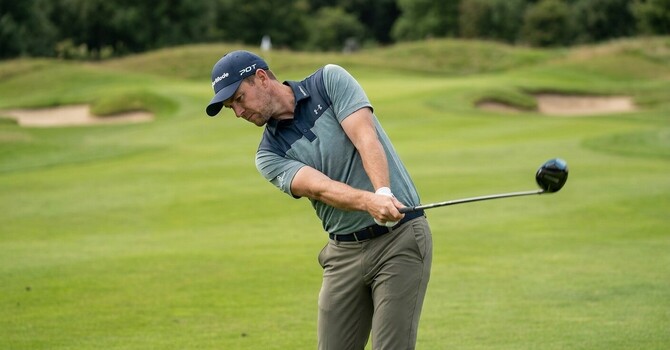
Think about a golfer whose weekends are built around a round at Rivercut, whose friendships and whose sense of who they are have grown up around the game over years. An injury there takes more than the swing. It takes a piece of the person, and getting through that well takes more than physical patience.
Part of it is expecting the bad days instead of being ambushed by them. A recovery is never a clean line upward. There will be a morning the pain comes back for no obvious reason, a week where nothing improves, a stretch that feels like sliding backward. If you have already accepted that those days are a normal part of the road, they cannot knock you off it. If you believed recovery was supposed to be smooth, the first rough patch feels like proof the whole thing is falling apart, and that is the week people quit.
Part of it is giving up the argument with reality. As long as you are stuck on why this happened to me, you are spending energy on the one thing you can never change. The moment you accept the injury as simply the situation you are in and start asking what it makes possible, that same energy turns into work. The golfer with a nagging hip can spend a year resenting it, or they can recognize that it is finally forcing them to fix the rotational restriction that was quietly costing them distance the whole time. Same hip. One of those golfers comes back with more range and a longer, more repeatable swing than they had before.
The hardest part is about identity, and it is the one nobody warns you about. When your whole sense of self rests on one thing you do, losing that thing for a while is genuinely destabilizing. That is not weakness. It is well documented. Adult athletes who tie their identity tightly to their sport show higher rates of anxiety and depression after a musculoskeletal injury, and the ones who struggle most are the ones who had no version of themselves outside the game (Furie and colleagues, 2023). The way through is not to care less about what you do. It is to remember that the things that made you good at it, the discipline, the focus, the willingness to do hard and boring work over and over, do not disappear when you get hurt. Those are the exact traits a great recovery is built on. You do not lose yourself in rehab. You find out that who you are was always deeper than the one activity you cannot do right now.
Endurance, in practice. The hard days are part of the plan, not a sign that it is failing. And the injury you stop fighting is the injury you can finally put to use.
Why You End Up Better, Not Just Healed
One thread runs through all three disciplines, and it is the reason I could not stop thinking about that book.
An injury handled the ordinary way is a loss you eventually recover from. An injury handled through perception, action, and will becomes something else. It stops the momentum that was hiding the problem. It forces an honest look at the weak link that caused it. It demands a stretch of focused, intentional work on your body that you never would have volunteered for. And it builds a kind of mental durability that follows you into everything after it.
The runner comes back with the hip strength and the mechanics they never would have built on their own, and the times drop. The lifter comes back with a higher ceiling and tissue that can finally handle what they ask of it. The golfer comes back with the mobility they were missing and a swing that holds up. In every case the improvement is not despite the injury. It is because the injury exposed something that was already limiting them, and the recovery is what finally fixed it.
That is the promise buried in the phrase "the obstacle is the way." The thing you saw as the end of your progress can become the reason for your next leap forward. But it only works if you handle it well, and handling it well is genuinely hard to do alone, precisely because you are inside it. Fear looks exactly like fact from the inside. The weak link is invisible without a trained eye to find it. And the right next step in the progression is a guess unless someone has seen a thousand cases like yours.
You Do Not Have To Face The Obstacle Alone
If you recognized yourself anywhere in this, the runner writing the catastrophe story, the lifter stuck grinding against the same ceiling, the golfer wondering who they are without their game, you should know that the thing standing in your way really can become the way forward. But you do not have to work it out by yourself, and working it out by yourself is usually what keeps people stuck.
Turn The Obstacle Into Your Comeback
At 417 Performance, our doctors do the part that is almost impossible to do on your own. We find the hidden physical issues that caused the injury and have been holding you back, we build the graded plan that carries you through recovery without the setbacks, and we help you come out the other side stronger, more stable, and more resilient than you were before you ever got hurt.
The injury exposed something. Let's fix it for good.
Or call (417) 597-3777
Sources
Furie K, Park AL, Wong SE. Mental Health and Involuntary Retirement from Sports Post-Musculoskeletal Injury in Adult Athletes: a Systematic Review. Current Reviews in Musculoskeletal Medicine. 2023;16(5):211-219. https://doi.org/10.1007/s12178-023-09830-6
Lee M, Carroll TJ. Cross education: possible mechanisms for the contralateral effects of unilateral resistance training. Sports Medicine. 2007;37(1):1-14. https://doi.org/10.2165/00007256-200737010-00001
Xiao M, van Niekerk M, Trivedi NN, Hwang CE, Sherman SL, Safran MR, Abrams GD. Patients Who Return to Sport After Primary Anterior Cruciate Ligament Reconstruction Have Significantly Higher Psychological Readiness: A Systematic Review and Meta-analysis of 3744 Patients. American Journal of Sports Medicine. 2023;51(10):2774-2783. https://doi.org/10.1177/03635465221102420
.jpg)