Shoulder pains are a common part of our modern life. With our high reliance on computers and cell phones combined with increased time spent sitting throughout the day, many active individuals experience shoulder pain at some point in their life. However, shoulder pain shouldn't necessarily mean you have to rely on medications or surgery to stop or prevent the pain. Here are 10 of our favorite shoulder pain exercises for beginners to help make shoulder pains a thing of the past!
Mobility exercises
The following exercises fall into the mobility category.
1. Arm circles
Arm circles are an effective method of warming up the shoulder joints and improving flexibility. Doing arm circles may help relieve shoulder tension and pain.

- Stand up straight with feet hip width apart.
- Raise the arms and extend them to the side, creating a T shape with the body.
- Make small circular motions with the arms.
- Repeat this exercise for 10–15 seconds, then switch the direction of rotation.
2. Doorway stretch
The doorway stretch is a static stretch that can help improve the flexibility of the shoulders, specifically the pectoralis muscles. A person can do this in a doorway or the corner of a room.
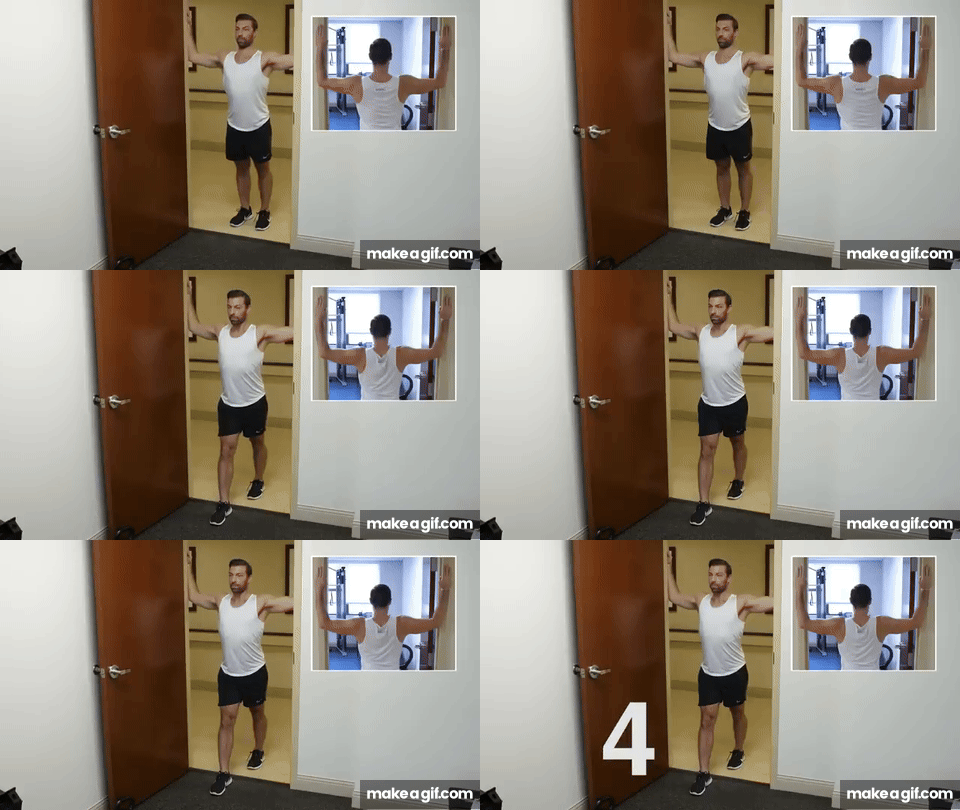
- Standing up, face a corner of the room close enough to touch each wall.
- Flex the shoulders and elbows to 90 degrees so that the fingers point to the ceiling.
- Place one hand on each wall, with the elbows at shoulder height.
- Lean into the corner. This should stretch the chest.
- Hold the stretch for 30–60 seconds.
- Repeat this three to six times.
3. Thread the needle
This movement may help relieve mobility restrictions in the shoulders and upper back.

- Start on the hands and knees.
- Place the right palm in the center of the mat, directly under the chest.
- Lift the left arm toward the ceiling, with the palm facing away from the body.
- Lower the left arm, sliding it under the right arm. Keep the left arm straight and avoid collapsing the chest.
- Deepen this stretch by lifting the right arm off the ground.
- Hold this position for 30 seconds.
4. Eagle Pose
The Eagle Pose is a yoga pose that stretches the shoulder muscle. A person looking to stretch their shoulders can opt to do the upper body part of the pose only.

- While standing or sitting, extend the arms to the sides.
- Cross the arms in front of the body, with the right arm over the left.
- Bend both the arms at the elbows.
- Twist the right forearm behind the left forearm and bring the palms together.
- Gently raise the arms upward to stretch the shoulders.
- Hold this position for 30 seconds.
- Lower the arms and gently release the position.
5. Child's Pose
The Child's Pose is a gentle, relaxing yoga pose that stretches the shoulders and back.

- Kneel on the floor, or a yoga mat, with the knees slightly wider than hip width apart.
- Go on all fours, placing the palms on the mat slightly in front of the shoulders.
- Sit back on the heels and hinge forward at the hips, resting the stomach on the thighs.
- Extend the arms in front of the body and rest the forehead on the floor.
- Deepen the stretch by pressing the chest and shoulders toward the ground.
- Hold this position for 30 seconds.
Strength exercises
The following exercises fall into the strength category.
6. Lateral raises
The lateral raise is a shoulder strengthening exercise. People can use lightweight dumbbells, resistance bands, or water bottles for this exercise.

- Holding a pair of light dumbbells, stand with the feet slightly wider than hip width apart.
- Raise the weights to the sides until they are at shoulder level.
- Remember to engage the core muscles.
- Slowly lower the weights down to the sides.
- Repeat this exercise for two sets, with each set consisting of 12–15 reps, three to four times per week.
7. External shoulder rotation
External shoulder rotation is another good exercise for strengthening the rotator cuff muscles and improving flexibility. People can use a resistance band or towel for this exercise.

- Hold the light resistance band in both hands.
- Keep both arms at the sides of the body and bend them at the elbow.
- Keeping one arm still, rotate the other away from the body while maintaining the 90-degree bend in the elbow.
- Hold this position for 5 seconds.
- Slowly return the arm toward the body.
- Repeat this exercise for two sets, with each set consisting of 12–15 reps, three to four times per week.
8. Internal shoulder rotation
Similar to the previous exercise, internal shoulder rotation can help strengthen the shoulder muscles.

- Attach a resistance band or large elastic band to a doorknob.
- Hold the other end of the band in one hand.
- Bend the arm at the elbow and pull the forearm toward the body.
- Hold this position for 5 seconds.
- Slowly return to the starting position.
- Repeat this exercise for two sets, with each set consisting of 12–15 reps, three to four times per week.
9. Reverse fly
The reverse fly exercise works the posterior deltoids, which are the muscles on the backs of the shoulders. People will need a pair of dumbbells, resistance bands, or water bottles.

- Stand with the feet hip width apart.
- Hinge forward at the hips and let the arms hang straight down.
- With the palms facing inward, raise both arms out to the sides and squeeze the shoulder blades together.
- Slowly lower the arms and return to the starting position.
- Repeat this exercise for two sets, with each set consisting of 12–15 reps, three to four times per week.
10. Downward Dog
Downward Dog is an inversion yoga pose that may help strengthen the shoulders and back muscles. It can also improve the mobility of the shoulders and thoracic spine (upper back) if a person performs it correctly.

- Start in a tabletop position, with the hands and knees on the floor or a mat. The knees should be directly below the waist, and the hands should be under the shoulders.
- Press into the hands and lift the hips toward the ceiling. Straighten the legs and lower the heels as close to the floor as possible.
- Hold this pose for 30 seconds.
Shoulder pain that isn't backing off?
If these moves aren't touching the problem, or the ache keeps returning every time you get back under a barbell or on the court, it's worth having the shoulder looked at by a sports chiropractor who works with active adults.
Book a Consultation